Four Solar Quotes Met a 22-Year-Old Roof. The Math Got Uncomfortable.
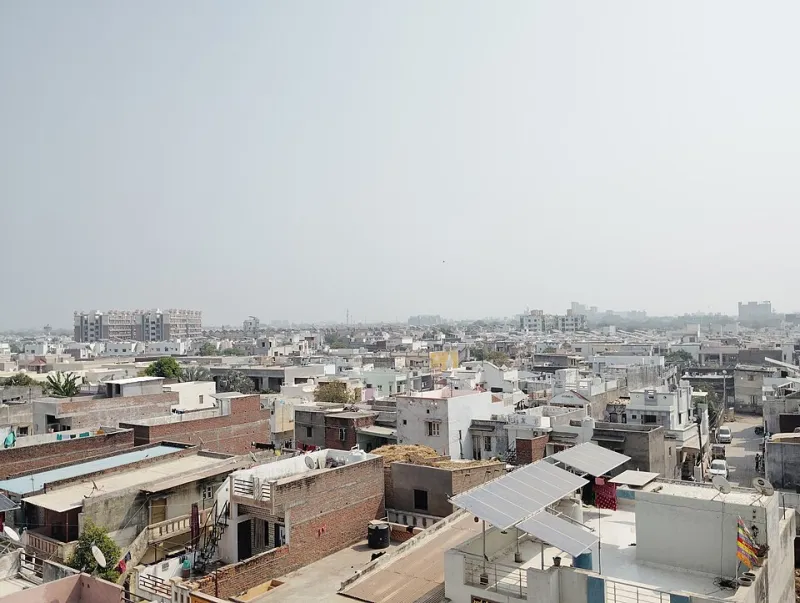
Photo: Nizil Shah, CC BY-SA 4.0, via Wikimedia Commons
Solar sales has a talent for making a 25-year decision feel like a weekend project. We got four quotes for the same 1,900-square-foot ranch outside Raleigh — same roof, same utility, same family of four — and the proposals might as well have described different houses.
The roof was 22 years old. That detail became the quiet main character.
Four quotes, four versions of the same sun
Installer A estimated 12,400 kWh a year and quoted $31,800 cash. Installer B estimated 9,800 kWh and quoted $28,400 cash but pushed a 1.99% loan with a 25% dealer fee. Installer C estimated 13,200 kWh and quoted $41,200, with a 0.99% rate and a 22% fee baked in. Installer D estimated 10,600 kWh at $34,900 and would not show a cash price until we asked twice.
A 3,400 kWh spread is not a rounding error. It changes the payback math by years. Ask each installer for the hourly shade report, the panel model, the inverter type, and the assumed utility-rate escalation. If they cannot produce those four things, you are comparing brochures, not systems.
The dealer fee is the price of the low APR
That 0.99% loan is not a gift. The dealer fee is usually folded into the financed principal, which means you are paying interest on a markup. Compare the cash price and the amount financed side by side. On Installer C's proposal, the financed amount was roughly $9,000 higher than the cash price. The low rate was real; so was the cost of getting it.
Ask two questions: What is the cash price? What is the total of payments if I finance? The difference is your financing cost, whether the salesperson calls it a fee, a rate buy-down, or a dealer participation charge.
The 22-year-old roof problem
An asphalt shingle roof in our climate often lasts 20 to 25 years. Ours was already on borrowed time. If the roof needs replacement in five years, the panels have to come down and go back up. Depending on the system size and local labor, that can run $3,000 to $6,000.
Only one of the four installers volunteered this. One offered a roof warranty that covered leaks caused by mounting, but not the cost of removing and reinstalling panels for a full roof replacement. Another said the roof 'looked fine,' which is not an inspection.
Before signing, get a roofer to inspect the deck and shingles. Ask the solar company in writing: Who pays to remove and reinstall the array if the roof is replaced? What is the workmanship warranty, and does it survive a roof replacement? If the solar loan lasts 25 years and the roof lasts eight, the math is not complicated.
Tax credit timing is not a checkout discount
The federal residential clean energy credit can cover a meaningful chunk of the system cost, but it is a tax credit, not a coupon. You claim it when you file, and it is nonrefundable. If your tax liability is smaller than the credit, you may not get the full benefit in one year.
Some lenders offer bridge loans or reduced payments for the first 18 months based on the expected credit. That can work, but read the reset date. A payment that jumps after the credit arrives is still a payment that jumps.
Utility-rate guesses are marketing, not math
The proposals assumed utility rates would rise 2.5% to 4% a year. Nobody knows. Net metering rules can change. Fixed charges can rise. Ask for a production guarantee and a degradation curve, then run your own payback at a lower escalation rate. If the system only works with aggressive rate assumptions, it is not a conservative purchase.
The uncomfortable lesson
The cheapest quote was not the best, and the biggest production estimate was not the most believable. The winning proposal had a middle-of-the-road price, a shade report we could audit, a clear roof contingency, and a cash price that did not require a decoder ring.
Solar can be a smart home upgrade. It is also a construction project attached to a financial product attached to a roof. Make all three explain themselves before you sign.