We Sent $9 and $250 Sunglasses to a Lab. The Price Tag Didn't Predict the Protection.
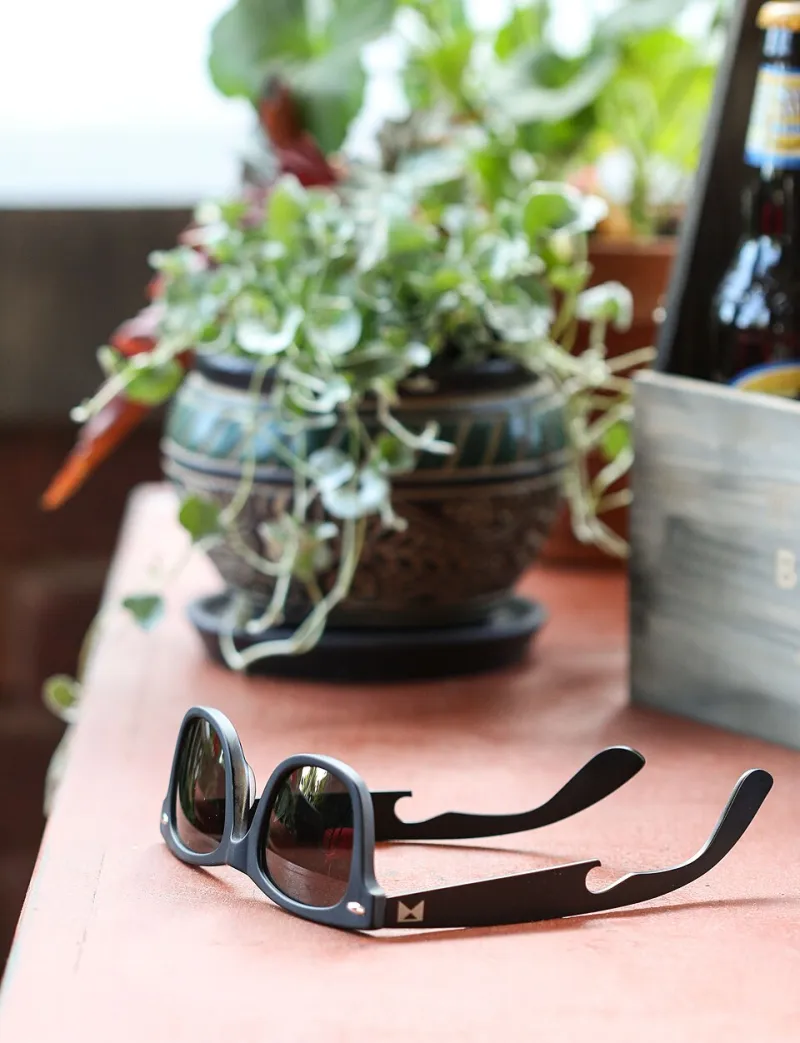
Photo: Personal Creations, CC BY 2.0, via Wikimedia Commons
There's a special kind of anxiety that comes with spending $200 on sunglasses. You baby them. You buy a hard case. You panic when they slide down your nose at the beach. Meanwhile, your friend grabs a $9 pair off a rack at a truck stop in Arizona and seems perfectly content.
So who's making the smarter purchase? We decided to stop guessing and get actual answers. We purchased five pairs of sunglasses — the cheapest we could find and some of the most hyped designer frames in America — and shipped them off to an independent optometry lab for testing.
What We Bought
Our lineup, from bottom-shelf to top-shelf:
- The Gas Station Special — $8.99, sold under a brand name that's clearly not a real brand
- The Drugstore Classic — $19, the kind of aviator you see at every checkout counter from Ohio to Oregon
- The DTC Darling — $48, one of those direct-to-consumer brands that advertises on every podcast you listen to
- The Mid-Tier Sport Pair — $95, popular with runners and weekend cyclists
- The Designer Status Symbol — $245, Italian-made, sold at department stores
All five claimed 100% UV400 protection. That's where the science starts.
The UV Test: The Great Equalizer
Here's the thing nobody tells you: UV protection is cheap. The coating or lens material that blocks UVA and UVB rays costs manufacturers very little, which is why even our $8.99 pair passed with flying colors — blocking 99.8% of harmful rays, nearly identical to the $245 designer pair.
The lab confirmed what optometrists have been saying for years: the price of sunglasses has almost nothing to do with how well they protect your eyes. A pair of $10 shades with a UV400 sticker is, from a health standpoint, doing the same job as the luxury frames.
One caveat — the gas station pair's sticker claimed UV400, and it delivered. But an optometrist we consulted warned that no-name pairs from unreliable sources occasionally don't match their labeling. Buy from a retailer with a return policy, and you're covered either way.
Lens Quality: Where Money Starts to Matter
This is where the rankings began to separate. The lab ran each pair through a prism distortion test, checking how much the lenses warped straight lines.
The two cheapest pairs showed noticeable distortion — enough that wearing them for a few hours could cause mild eye strain or headaches for sensitive wearers. Nothing dangerous, but you're paying a small comfort tax.
The $48 and $95 pairs were dramatically better. Clean optics, minimal distortion, and noticeably better optical clarity when looking at water or pavement glare.
The designer pair? Excellent — but only marginally better than the $48 option. Our lab tech put it bluntly: "You're paying for the last 5% of performance and 95% of the name."
The Drop Test: Gravity Doesn't Care About Your Logo
We dropped each pair lens-down onto concrete from four feet — roughly the height of dropping your sunglasses getting out of the car.
The $8.99 pair cracked. No surprises there.
The $19 drugstore aviators survived but scuffed badly.
The $48 DTC pair bounced, survived, and looked nearly new.
The $95 sport pair survived thanks to a rugged frame design clearly built for activity.
The $245 designer pair survived the drop but chipped the lens coating on impact. Ouch.
So What Are You Actually Paying For?
Add it up, and the picture is clear:
- UV protection: identical across the board
- Optical quality: meaningful upgrades up to about $50, diminishing returns after
- Durability: depends more on materials and design than price
- Branding, case, and packaging: the rest of the price tag
For most Americans — people who lose sunglasses in the car, at the lake, at a kid's soccer game — a quality pair in the $40 to $60 range is the sweet spot. You get 90% of the performance of luxury frames at a quarter of the price, with a loss that stings a lot less.
If you have specific vision needs, want prescription lenses, or plan to keep one pair for a decade, the premium options earn some of their cost. But if someone tells you a $250 pair is protecting your eyes better than a $50 pair? The lab says that's marketing, not optics.
Our advice: spend the savings on a second pair. Your glove compartment will thank you.