Five Inspectors, One Crumbling Ranch: What $1,850 of Home Inspections Taught Us About the $500 Report You're About to Buy
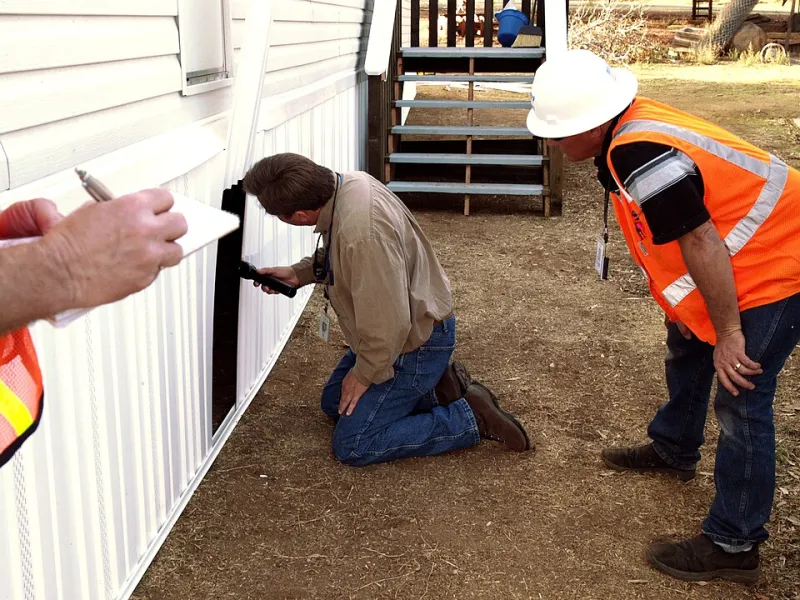
Photo: Amanda Bicknell, Public domain, via Wikimedia Commons
Buying a fixer-upper in the Midwest means accepting a certain amount of mystery. But when we found a 1974 ranch house outside Columbus — original shag carpet, suspiciously fresh paint on one patch of ceiling — we decided to remove as much mystery as our budget allowed. Our plan was a little strange: hire five different licensed home inspectors, pay full price for each inspection, and compare the results side by side.
Total spend: $1,850. Total regret: none. Here's what happened.
The Five Reports, Ranked by Guts
We won't name the inspectors, but we'll describe them honestly, because the differences were stark.
Inspector A — $275, 12-page report. In and out in 75 minutes. His report was mostly checkboxes with a few boilerplate paragraphs. He noted "roof shows normal wear" and moved on. He did not enter the crawlspace. When we asked why, he said the access was "tight." It was not tight. We got in wearing khakis.
Inspector B — $325, 19-page report. A pleasant guy, clearly experienced, but his report read like a fortune cookie: "recommend further evaluation by a qualified professional" appeared eleven times. On what? On everything. An inspection that defers everything tells you nothing.
Inspector C — $400, 34-page report. Our first genuinely useful one. He ran moisture readings along every exterior wall, flagged hairline settling cracks in the foundation, and noted that the water heater was installed without a thermal expansion tank — a small thing that's actually a code issue in Ohio. He spent nearly three hours on site.
Inspector D — $425, 41-page report. Thorough, well-organized, with annotated photos on nearly every page. He caught a bathroom vent dumping into the attic (a classic Midwest mold factory) and tested every outlet. What he didn't do was climb the roof or enter the crawlspace — both listed as "not accessible" in the liability fine print.
Inspector E — $475, 63-page report. The most expensive, and worth it. He went into the crawlspace on his stomach, took thermal images of every exterior wall, and — critically — put a moisture meter on that freshly painted ceiling patch. His finding: an old, repaired leak with active staining around the repair, plus evidence of a slow plumbing drip in the wall behind it. Estimated repair range in his report: $6,000–$9,000.
What Each One Caught — and What Everyone Missed
| Finding | A | B | C | D | E |
|---|---|---|---|---|---|
| Ceiling leak staining | ✗ | ✗ | ✗ | ✗ | ✓ |
| Bathroom vent into attic | ✗ | ✓ | ✓ | ✓ | ✓ |
| Missing expansion tank | ✗ | ✗ | ✓ | ✓ | ✓ |
| Crawlspace entered | ✗ | ✗ | ✓ | ✗ | ✓ |
| Foundation hairline cracks | ✗ | ✗ | ✓ | ✓ | ✓ |
Two things jumped out. First, the cheap inspection wasn't just thinner — it was wrong. "Normal roof wear" glossed over flashing that Inspector E called out as "end of life." Second, even the good inspectors had blind spots. Nobody tested for radon (we paid separately for that — worth it in Ohio). Nobody evaluated the main panel's aluminum branch wiring beyond a generic "recommend electrician," which, fine, that's fair, but it cost us another $250 to get a real answer.
How to Tell a Real Inspection From a Checkbox Walkthrough
After five inspections, the pattern is obvious. Before you spend your $500, ask these questions:
- Will you enter the crawlspace and attic? If the answer is "if accessible," press harder. Ask what specifically would make it inaccessible.
- Do you use a moisture meter and thermal camera as standard? Inspectors C and E did this without being asked. A and B didn't own a thermal camera.
- How long is the inspection, typically? Under two hours for a 1,600-square-foot house is a walkthrough, not an inspection.
- Can I see a sample report? A 12-page checkbox form with no photos is a red flag. You want annotated photos, specific locations, and repair cost context.
- What's your repair background? Our two best inspectors had construction experience before licensing. It showed in how they explained why something mattered.
The Math That Made It Obvious
Inspector E cost $200 more than Inspector A. The ceiling repair cost us $9,000 — which, thanks to E's report, we negotiated $7,500 off the purchase price. That's a 37-to-1 return on the difference in inspection fees.
The uncomfortable truth is that home inspection is an unregulated-feeling corner of a regulated industry. Licensing requirements vary by state, and in some states there's essentially no meaningful oversight of report quality. You're buying a person, not a service. Interview two or three, ask for a sample report, and pay for the one who wants to crawl under your house.
We closed on the ranch in October. The ceiling is fixed. The shag carpet, mercifully, is gone. And Inspector E's number is saved in our phones for the next one.