60 Days of Living by the Utility Company's Checklist: What Actually Cut Our Bill (and What Was Just an Upsell)
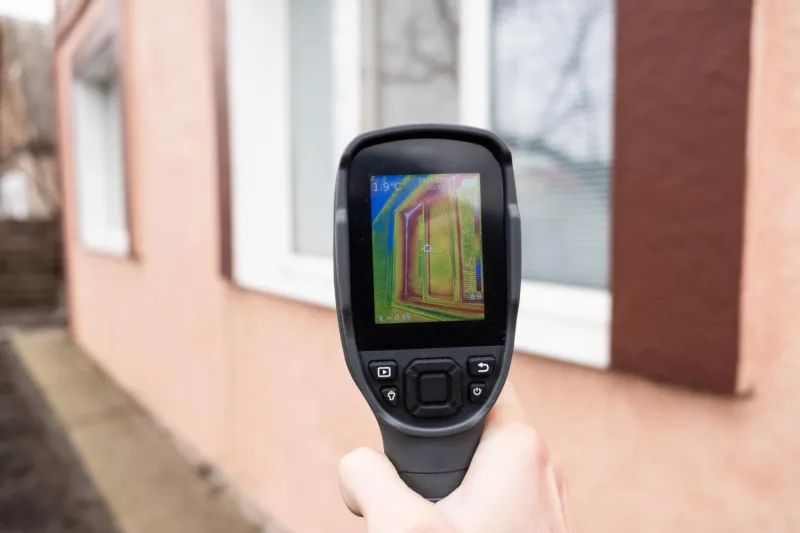
Photo: energy auditor thermal camera inspecting home window, via www.rogersinsulation.com
When our utility company offered a 'complimentary home energy assessment,' we did what most people do: said yes, forgot about it, then cleared a Saturday morning when the technician finally called. Two months later, we have receipts — literal ones — for what worked and what didn't.
Here's the short version: the audit itself was genuinely useful. About a third of the recommendations were quietly self-serving. And the single biggest savings came from something the auditor mentioned in passing while packing up his gear.
What the Free Audit Actually Involved
The visit took about two and a half hours. A technician from a third-party contractor (not the utility directly, which surprised us) walked the house with a thermal camera, checked our furnace, tested the water heater, and ran a blower door test — basically sealing our front door with a fan and depressurizing the house to find air leaks.
The blower door test was the star of the show. Watching the thermal camera light up our drafty 1990s windows in orange was oddly persuasive. We didn't need a sales pitch; the house was snitching on itself.
At the end, we got a printed report with eight recommendations, ranked by 'estimated annual savings.' That ranking, we'd later learn, deserves a healthy dose of skepticism.
The Recommendations, Ranked by What Actually Happened
We implemented everything we reasonably could and tracked our electric and gas bills against the same two months from the previous year, adjusted for weather using degree-day data (yes, we became that household).
1. Air sealing around doors and windows — the quiet winner. The auditor flagged weatherstripping and caulk as low-cost, high-impact. Total spend: about $60 at the hardware store and one unproductive Saturday. Our gas bill dropped roughly 14% compared to the weather-adjusted baseline. Nothing else came close per dollar spent.
2. Smart thermostat — good, but not the miracle. The utility's program offered a rebate on a well-known smart thermostat, bringing it to about $50. It works, the scheduling is nice, and our electric bill ticked down maybe 6–8%. But the auditor's 'up to 20%' framing only holds if your current habits are terrible. We already had a programmable thermostat we mostly ignored. If you're starting from nothing, the rebate makes it worthwhile; if you're already diligent, temper your expectations.
3. Phantom-load fixes — real, tiny, easy. Smart power strips on the entertainment center and home office cost about $45 total. Savings? Around $4–6 a month. It's not life-changing, but it's the rare recommendation that pays for itself in under a year with zero ongoing effort.
4. Duct sealing — the middle ground. We paid $180 out of pocket (after a rebate) for a contractor to seal accessible ductwork in the basement. Our basement is noticeably less cold now, and the gas bill reflects a modest improvement. Fair value, but the estimated savings in the report were optimistic by roughly double.
Where the Audit Turned Into a Sales Pitch
Here's what the brochure doesn't mention: the assessment is partly a lead-generation funnel.
The two biggest-ticket items on our report — $8,400 for attic insulation and $3,200 for a heat pump water heater — were quoted by the very contractor performing the 'independent' audit. We got a second opinion from a separate insulation company: $5,900 for comparable work. That's a 42% gap on the exact same scope.
We did eventually insulate the attic — with the other contractor. It's genuinely cut our heating costs (another 10% or so on gas). But the audit report's savings estimate for insulation assumed our attic had almost no insulation at all. It had some. The estimate didn't adjust for reality; it adjusted for the quote.
The water heater pitch we declined entirely. Our current unit is seven years old and fine. Replacing working equipment to chase savings is the kind of math that only works on paper — the payback period on that swap, at our gas prices, was north of a decade.
The Freebies Worth Grabbing
Tucked at the end of the visit, the technician handed over a tote bag: LED bulbs, a low-flow showerhead, faucet aerators, and two door draft stoppers. Retail value maybe $40. We'd call this the most honest part of the program — no strings, no follow-up call, just stuff that lowers your bill a little.
If your utility offers a kit like this, take it even if you skip everything else.
The Math, Sixty Days Later
Total out of pocket: roughly $285 (weatherstripping, caulk, smart strips, smart thermostat after rebate, duct sealing after rebate) — plus the attic insulation as a separate, bigger decision we'd have made eventually anyway.
Total savings over the 60-day test window: about $97 on combined gas and electric, weather-adjusted. Annualized, the cheap fixes should return our $285 in under a year. The insulation will take several more. The upsell quote would have added years.
What We'd Tell a Friend
Take the free audit — the blower door test and thermal imaging alone are worth an hour of your time. Implement the cheap stuff yourself before buying anything. Get an independent quote on any big-ticket item, because the 'free' assessment doubles as a sales visit whether the fine print admits it or not. And be suspicious of savings estimates that come attached to a price quote from the same person who wrote the estimate.
Your utility company isn't lying to you, exactly. They're just showing you the version of the math that helps them most. Run your own numbers — it took us one spreadsheet and a Saturday afternoon, and it was worth more than every recommendation on the printed report.