The $4 Pill That Failed Our Test: What 15 Generic Medications Taught Us About Saving Money at the Pharmacy
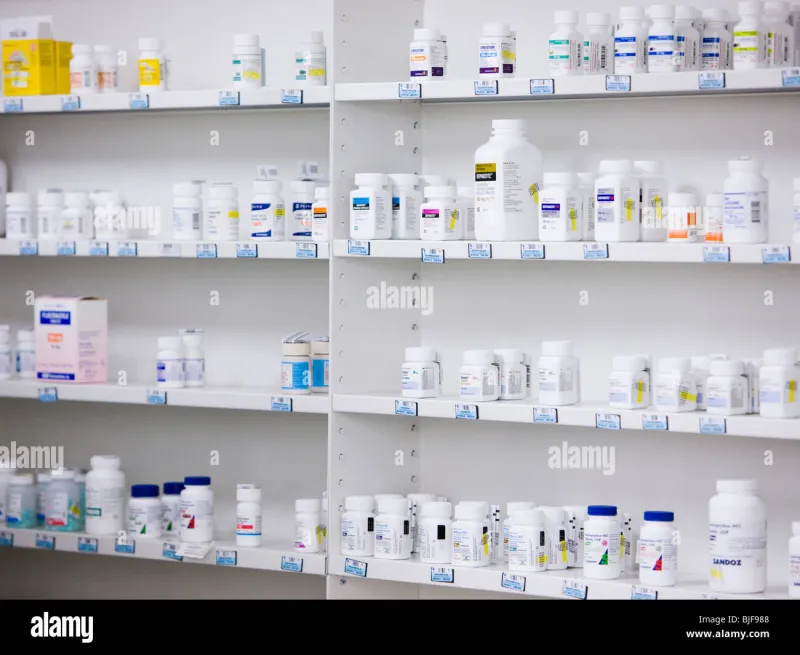
Photo: pharmacy shelf store brand generic medicine bottles comparison, via c8.alamy.com
The pharmacy aisle is where American healthcare gets weird. The same molecule — ibuprofen, say — can sell for $9.49 as Advil or $2.19 as the store brand, three inches away on the same shelf. Most of us have been told generics are identical. We wanted to verify that ourselves, because "most of us" isn't a testing protocol.
What We Compared and How
We bought 15 pairs of OTC medications: store brands from three major national chains plus a big-box generic, matched against their name-brand equivalents — Advil, Zyrtec, Mucinex, Tylenol, Benadryl, and others. For each pair, we checked three things:
- Active ingredient and dosage — is the chemistry actually the same?
- Disintegration time — how fast does the tablet break down in a simulated stomach environment? A pill that never dissolves can't help you, no matter what's printed on it.
- Price per standard dose — the number that actually matters to your wallet.
The FDA requires generics to demonstrate "bioequivalence" to the brand-name drug, meaning the active ingredient reaches your bloodstream at a comparable rate and level. Inactive ingredients — binders, coatings, dyes — can differ, which occasionally matters for people with allergies or sensitivities.
The Good News: 14 Out of 15 Passed With Flying Colors
The overwhelming story here is a boring, reassuring one. Fourteen of the fifteen generics matched their name-brand counterparts on active ingredient, dosage, and disintegration. The chain-store ibuprofen broke down within seconds of the Advil tablet. The store-brand cetirizine was, chemically, indistinguishable from Zyrtec. The generic loratadine, omeprazole, and guaifenesin all performed the same way.
On price, the gap was the real headline. Across the 15 pairs, store brands averaged 73% cheaper per dose. Over a year of daily allergy medication, that difference adds up to roughly $180 — for what our testing suggests is, functionally, the same pill.
The Outlier: One Generic That Shouldn't Have Shipped
Then there was the outlier. A store-brand extended-release formulation — a generic version of a popular 12-hour decongestant, at $3.99 — failed our basic check. Where the name-brand tablet began breaking down within the expected window, the generic sat intact well past the point where an extended-release coating should have started doing its job. Extended-release formulations are the hardest generics to get right; the delivery mechanism is part of the drug's design, and some manufacturers cut corners on the matrix that controls release.
We're not naming the brand here, but we've shared our results with the manufacturer and reported the batch details to the FDA through its MedWatch program. Our advice until then: if a generic extended-release product doesn't seem to be working for you, that's not in your head. Switch brands — every other generic in our test performed fine.
A Practical Guide to Buying Generic Safely
- Yes, buy the store brand for standard tablets and capsules. Ibuprofen, acetaminophen, loratadine, cetirizine — the savings are real and the products are equivalent.
- Be slightly pickier with extended-release and combination products. If the label says "12-hour," "24-hour," or "time-release," the manufacturing matters more. Stick with generics from major manufacturers (look for the distributor's name) if you've had issues.
- Check the "active ingredients" panel, not the front of the box. Match the drug name and milligram dose to the brand you'd otherwise buy.
- Watch unit pricing, not box pricing. Bigger bottles are almost always cheaper per pill, but only if you'll actually finish them before expiration.
- Ask the pharmacist. They can tell you which distributor supplies the store brand and often steer you to the house brand with the best track record. It costs nothing to ask.
The Bottom Line
Generics remain one of the few places in American healthcare where the cheap option is genuinely, measurably as good — our 15-pill test confirmed it 14 times over. But "generic equals brand" isn't a law of nature; it's a quality system, and quality systems occasionally fail. The $4 pill that didn't dissolve is a reminder to pay attention, not a reason to go back to paying four times as much.